Wednesday, November 18, 2015

Music Review #15:
Béla Fleck & The Flecktones
UFO Tofu
1992
Warner Bros. Records


A very artistic and similarly quite unique band from Tennessee called Bela Fleck and the Flecktones came around in 1990, also releasing their eponymous album in the same year. Their history stems from the band's front-man, Bela Fleck himself. Fleck was well known as a young banjoist who started his musical career in 1976. Fleck won several Grammys in the years after 1995, but his early music is still well known. But where the forked road emerges is the differences between his solo material and his full band act in the 90's. While Fleck usually centered himself around typical and archaic Americana, The Flecktones delved more into the humble use of electronics, psychedelics, and jazz. What turned out was a honestly more colorful and expansive sound produced by a full team of musicians.

Two years after the band had formed, they had come to record their third palindromic album, UFO Tofu, in the summer of 1992. In way of formula very little has changed. However, even in the third time around, producing the same music is not a con in my mind. The music is still extremely creative and bursting with energy. The base may sound very similar, but with such a varied selection of musical instruments and compositions a repeated theme or two is not unwelcome. A differentiation is always welcome, but UFO Tofu's zany banjo from Fleck, as well as Roy Wooten's Drumitar being used with the proficiency of a seasoned guitar player. UFO Tofu is always a good cheap pick up if you find it in a lonely thrift store in the middle of the west country.

© 2015 - The Frying Pan & Thatcher 
Originally written for Prog Archives on 11/16/2015.
Visit the site at www.progarchives.com

Tuesday, November 17, 2015

Music Review #14:
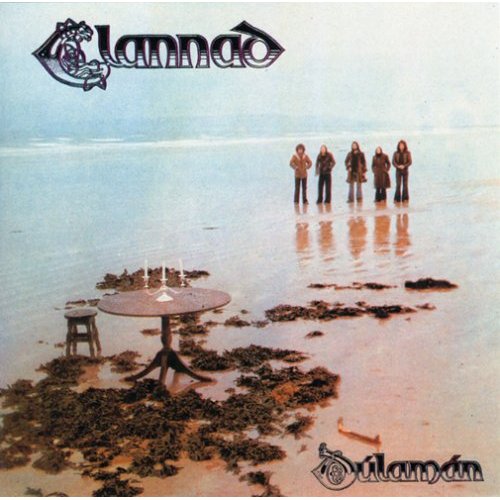
Clannad
Dúlamán
1976
Gael Linn


Irish Folk was undoubtedly my favorite music genre in my early childhood. It was responsible for sending me on a very expansive journey across the wide variety of music Earth had in store. I rarely listen to music from Ireland these days, usually enjoying more time delving into those genres that simply need more time to digest (like prog), but I do find myself occasionally gravitating back to my roots. When I heard of Clannad, I was thrilled to see two of my favorite genres forge together in an awesome 70's culmination, and even played by a group of skilled musicians. Dúlamán is the third album in Clannad's discography, and is completely what I expected.

Obviously because these individuals are Irish (with a touch of arts-y), they will sing in Irish Gaelic, one of my favorite languages ever forged by mankind. Not to mention the language is best when sung, and sung by indigenous peoples to the country of Ireland. All throughout the Irish spirit of fun and playfulness never ceases. I'll admit, Irish are best at drinking songs, which is most prudent seeing as they can bring up such a feeling of comradery and fraternity in a setting of happiness which can be shown clearly in their more stylistic interpretation. Clannad uses their conjoined vocal powers (sounds like a superpower), as well as Irish folk constants like the flute and the harp to sweep you across the sea to the rocky shores of County Donegal to experience the magic. Most everything on the album is pure, heartfelt, and wonderful. Even I, a seasoned veteran of the Irish Folk genre was surprised and impressed by these bunch. Highly recommended. Can't wait to see what else is in store.


© 2015 - The Frying Pan & Thatcher 
Originally written for Prog Archives on 11/17/2015.
Visit the site at www.progarchives.com
Monday, November 16, 2015

Music Review #13:
Traffic
The Low Spark of High Heeled Boys
1971
Island Records


Traffic's 1971 release of the oddly named The Low Spark of High-Heeled Boys gives off an air of great stylistic qualities, and has deservingly been noted as the band's greatest achievement. Unlike Gentle Giant, another well known band of the eclectic progressive genre, Traffic's music tends to slow-dance over the line of folk rock, jazz, and of course eclectic rock. ,Low Spark b has many odd structures, which become very prominent as the album progresses. I found myself loving the album despite its thorough lack of tracks.

Medieval sounding bard music slips in (much like Gentle Giant did) quite often. In the opening track 'Hidden Treasure', with soothing sounds that bring you sights of far off places and a subtle air of adventure. Although I found the track to be the only one I can't particularly listen to over again, mostly due to being so bland in light of the rest of its brethren. However, the track's slow tell-tale lyrics and minor progression is simply a lead into the eleven minute eponymous piece that is described as the center of the entire album. 'The Low Spark of High-Heeled Boys' is a track that seems much shorter than it actually is, mostly due to it's enjoyable yet sometimes repetitive nature. But smooth jazz it is so I won't delve too deep into it.

One small, mostly unnoticeable problem I had with Low Spark was the seemingly indecisive way Traffic chose the structure of the tracks. With every song there is a different listen, aside from a small similarity between the title track's climax and the straight up rocker of 'Rock & Roll Stew', but even then the latter being much more aggressive takes away any prior similarities that you'd hear while scrolling through the tracks. In my opinion, a variegated line up of tracks qualifies as an album that never gives you a dull moment.

On the point of the rockier tracks, the most distinguished being 'Rock & Roll Stew' and 'Light Up Or Leave Me Alone'. Having never been a fan of soft rock pretending to be greater than it is, the former of the two I've found to enjoy much more often. 'Light Up', especially during the later parts however does bring to the table alot of Who-like rocking, but because of this seems like a song stuck in the 60's. Enjoyable, yes of course, but not something I come back to very often. 'Rock & Roll Stew', living up to it's name, brings a great deal of mixed rock soup including some excellent funk. Combine that with the great vocals from Winwood and you have quite the delicious stew!

The slower tracks that the album retains are 'Many a Mile to Freedom' and 'Rainmaker'. The former sort of takes elements from the rest of the album, combining 'Hidden Treasure'-like softness and the subtle yet quietened rocking of 'Rock & Roll Stew'. This makes up for quite an adventure, especially one that I can sit through for seven and a half minutes and not complain about. 'Rainmaker' is perhaps my favorite song off of the album, being the one that first appealed to me while scrolling through the tracks. It bears a haunting melody and lyrics of a farmer reminiscing of his crops' unfortunate fate from drought. The theme of the song most likely derives to the tale of John Barleycorn told in the prior album, but I feel like this song takes the cake for most complex and best-sounding.

In an overall sense, The Low Spark of High-Heeled Boys is an album that goes very under appreciated in the world of the general music population, and unjustly so. If you haven't thoroughly heard or never heard this album at all, then I think you should find the vinyl and give it a spin. It is quite enjoyable. 4/5 rounded to 5.


© 2015 - The Frying Pan & Thatcher 
Originally written for Prog Archives on 4/7/2015.
Visit the site at www.progarchives.com

Sunday, November 15, 2015

Music Review #12:
Phish
Joy
2009
JEMP Records


Over the years, Phish has had a knack for writing their own music. I don't mean in the way of coming up with their own compositions of course. What I mean is, they tend to play whatever they feel like regardless of boundaries or social musical norms. Phish revels in the times where they have a chance to produce more music simply for the enjoyment of both their peers and fans. 2009 was not an exception, where Anastasio and company jumped on the chance the rekindle the light that meant so much to them, as well as to many music listeners in the public. What came from this excitement was a bundle of creative happiness aptly titled "Joy".

Phish wasn't doing too great during the 2000's, especially in the crowd that enjoy them most for their experimental jazzy qualities as well as their ode-like style reminiscent of Grateful Dead. Phish moved more away from this and closer to a pop-rock, alternative rock style that became explosively prominent during the late 90's and of course the 00's. Starting out the year with Farmhouse, whose title track is the most listened song of their discography to date, the disappointingly bland Round Room in 2002, and Undermind in 2004. Undermind seemed to be the temporary breaking point for these jazz giants, as they quickly descended into a hiatus that lasted a whole five years. As I said before, this created an environment where the entire band was ready to participate wholeheartedly. This also made for a very light-hearted album with more odes to earlier jazz bands, as well as a largely inspired tracklist that has some highlights that are much more melodic for Phish.

Joy starts out with perhaps the happiest song, titled 'Backwards Down The Number Line'. This song I've found to pick me up even when I'm in a bad mood. This is sort of expected, seeing as the song follows the happy highlights and feelings from Anastasio's life. At moments, you can almost notice him smiling during the song. That's something that is hard to do, even for a band like Phish. The track immediately after, 'Stealing From the Faulty Plan', is completely the opposite. A very 70's-esque beat and vocals, with some awesome drumming by Fishman. High pitched guitars lead the way, the way Pink Floyd sort of incorporated it in their more arts-y albums, especially '72 and afterwards. The backstory of the song is also the opposite of it's predecessor, this time following the story of Trey Anastasio's sister's death from cancer. Even with this morbid base the song still seems to throw up very jaunty moods and one of the greatest guitar solos ever to rock the band. The title track is a very...well, earnest. What I mean is, the song is the musical incarnate of good memories, ones that you'd remember from your childhood. In fact, the word "happy" is used numerous times throughout.

After 'Joy', the albums descends more into the jazzy Phish of the 80's and 90's. 'Sugar Shack' combines funk elements with bouncy dual vocals making for a very sing-a-long type track. 'Ocelot' is a clear ode to Grateful Dead, with more barreling piano and country feelings. I don't exactly love it, but it's obvious that the band (especially Anastasio) loves Grateful Dead and decided to make a song dedicated to their main influence. 'Kill Devil Falls', by no means a bad track, is perhaps my least favorite. It has a very boring mood that ceases to interest me very well. Again, not awful but definitely the one song that I'd pass. 'Light' has some interesting and unexpected Who-ish elements, especially with the gravely guitar and fluid drumming. 'I Been Around' is basically a little quick, funny song made solely by Page McConnell. I love the song just for it's comedic, almost skit styling, as well as of course Page's piano skills. The microphone effects makes it seem like he's almost right in front of you. 'Time Turns Elastic' is another one of my favorites. This thirteen minute long epic encompasses so much that I love about Phish, that it's hard to explain them all. I suggest that you listen to it for yourself to get really in touch with it, because this song is not only very progressive, but simply good. 'Twenty Years After' is the closer, and very much like 'Kill Devil Falls', is pretty boring. Although more compositionally complex, the songs retains mostly the same features that made me not like the former. Some interesting parts I've found to intrigue me, which at the very least kept me pretty enthralled to listen to it all the way through and come back to it occasionally.

This album is something that I never expected liking so much, but I've found that giving it a chance and a thorough listen, that it is definitely a great album by any standards. Therefore, I give this album a rating of 4.5/5, and suggest that you go listen to it. Maybe it will fill you with as much "joy" as it did for me.


© 2015 - The Frying Pan & Thatcher 
Originally written for Prog Archives on 6/19/2015.
Visit the site at www.progarchives.com

Saturday, November 14, 2015

Music Review #11:
Tenacious D
Tenacious D
2001
Epic Records


When I first heard Jack Black and Kyle Gass going at it with guitars, I honestly laughed harder then I had in a long time. Usually, this would be a bad thing. In this case, I think they've done what they were trying to go for.

To start out, we have 21 tracks on the album in total. There is a mix of short skits and full length to shorter songs in equal measure.

The skits are usually very funny. Black and Gass make very stupid humor seem so much better than in it's raw form. They are short but sweet little skits.

The music is absolutely phenomenal. Although there are some unnecessary or vulgar tracks on it, most of them are generally enjoyable. Their beat and composition shows the work of great musicians, while still making it comedic and stupid. Their skills really show with their extraordinary intrumentship make this not some petty comedy album.

This is definitely a good album to pick up by anyone to have a good laugh.

© 2015 - The Frying Pan & Thatcher 
Originally written for Metal Music Archives on 8/25/2014.
Visit the site at www.metalmusicarchives.com

Friday, November 13, 2015

Music Review #10:
Stabbing Westward
Ungod
1994
Columbia Records


Industrial metal is a genre that has been led by Trent Reznor since his forming of NINE INCH NAILS in 1988. Many people seem to think that, seeing as Reznor so plainly and clearly advanced the generation in the pairing of technology and metal music, that he single-handedly brought the genre to the charts and into the mainstream. But there is another band that is filed under the same genre, and was formed three whole years before the formation of NIN, that is usually forgotten in the eyes of the public.

Ungod is the debut album by the Chicago-formed American industrial metal act, STABBING WESTWARD, released in 1993. Being the first release by the band since their 1990 demo release of "Iwo Jima", the band had taken very much time to develop a sound that appealed to them. A three year gap in recordings may seem a little ridiculous; I sure thought it was when I did some research on the band, but after listening to the album I have come to release that it was time very well spent.

After a few years of me listening to NIN, I have come to know Industrial metal as an extremely experimental genre, with several different sounds and tempo fluctuations that coincide with heavy metal guitars and bass (along with other instruments). But the main thing I gathered was that metal was embedded into the techno-like experimenting to make for still brutal but more artful grace in the way it was played. STABBING WESTWARD does it very differently.

In fact, this album is on the verge of me calling it alternative metal, because it's less electronic rhythms combined with metal, and more heavy metal that use different electronics to help the guitars and other instruments along, filling in gaps that they wouldn't usually fill alone. It's very interesting to listen to not traditional industrial all the time, because alternative industrial metal is a (sub)sub-genre that was pioneered by this band. Ungod really shows that quite well, and in a way better than a lot of Reznors releases.

Some highlights of the album that I would suggest is 'Lies', with very angry lyrics mixed with industrial, very cliche NINE INCH NAILS but it is a very familiar territory for metal heads. 'Throw' succeeds it, and is actually much better. Industrial experimentation has gone down quite a few notches to make way for heavier chords and bass/drum lines, but is quite good. 'Violent Mood Swings' takes the cake for my favorite song on the album and perhaps by this artist. It combines experimentation and quick riffing to make for a piece that is just right on the ears. Although very Reznor-like in sound, it is different when you listen to it with an open mind. The fantastic album closer 'Can't Happen Here' brings a more instrumental piece as opposed to an angry, heavy, and pounding one. Although it might seem a little 'mainstream', it is enjoyable, as I said before, if you use an open mind while listening.

So even though NIN may be your top pick as an industrial metal artist, I would highly suggest you give a listen to these guys. They are definitely worth their salt.

Go give it a listen.


© 2015 - The Frying Pan & Thatcher 
Originally written for Metal Music Archives on 12/12/2014.
Visit the site at www.metalmusicarchives.com

Wednesday, November 11, 2015

Music Review #9:
Ozzy Osbourne
No More Tears
1991
Epic Records


England-born metal musician Ozzy Osbourne is most known for his gold strike with the creation of his band Black Sabbath during the late 60's. What is less known but still quite popular perhaps is Osbourne's solo career. Among his discography are albums such as Blizzard of Ozz (most well known for the singles 'Crazy Train' and 'Mr. Crowley') and Diary of a Madman, both released in the 80's. Osbourne's solo career is still continuing, his latest release being in 2010. Although he has a large collection of albums spanning over four decades, his most critically acclaimed period was during the aforementioned 1980's. While Osbourne left Black Sabbath in the late 70's, people started to get more bored with Osbournes music, or at least less interested than when albums like Blizzard of Ozz were popular. Then came the era of grunge and pop punk, and Osbourne produced still more albums. Among these and one of the earlier ones was the 1991 release of No More Tears. The album was met with positive applause, reaching the "Top 200" Billboard at number 7. The album did remarkably well, and Osbourne had definitely achieved what was perhaps his best hit in the 90's.

Osbourne brings back to the table the classic sound of Sabbath that was loved by metal-heads who adored the style that the band had before Dio took over. The album is overall much more different from what Ozzy unsuccessfully tried to do before he left the band. While Never Say Die and Technical Ecstasy where very centered around a AC/DC-esque pop hard rock angle, No More Tears brings in ripping chords and meaty bass. The album comes in at a decent note, with the track 'Mr. Tinkertrain', although the song has a little too much synth-y floating in it for my tastes. Not that in general is a bad, but too much of it without a good balance of normal metal offsets it too much for me. The album does quickly regain footing and with a roar with my personal favorite track titled 'I Don't Want To Change The World". Living up to its title, the song resembles very traditional Sabbath that I loved so much about albums like Master of Reality and Vol. 4.

In the album there also lies a few ballads. 'Time After Time' and 'Mama, I'm Coming Home' are among the most prominent of the eleven total tracks. The latter comes directly after 'I Don't Want to Change The World', so it sort of offsets what the song achieved. Although the song is much more based in a poppy major key, it's decent. Arena rock is very present, sort of Bon Jovi like. I give it a pass though because it's Ozzy and not Jovi. 'S.I.N.' sounds very reminiscent of Paranoid era Sabbath, with a great composition and awesome fluidity of chords and riffing. Then there are the obligatory slammers that are meant to be, well, slamming you with their pure metallic power. These would be 'Desire' and 'Hellraiser', with very heavy, trudging notes with Ozzy vocal effects thrown in and some periods (Laughing being the most heard). The final track that particularly stands out is the title track. Coming in at an unusual 7:24, this epic is very experimental in the way of Ozzys music. The song mixes interesting compositions of things that range from flat out riffing to interesting effect segments that makes the track seem oddly progressive. The song mixes in radio speech and Supertramp like piano in one segment, with some very 70's-ish synth thrown in. It does give some Ozzy zest though with pounding drums from Castillo and of course the funky bass line that opened it. It is a really enjoyable song, especially when the echoing and, of course, Ozzys fantastic vocals.

Ozzy Osbournes blast into the 90's was explosive, pounding, and extremely enjoyable. Most definitely my favorite from the mans personal discography, and it will most certainly live in my heart as a metal highlight of the 90's and perhaps of traditional metal in general. I suggest that anyone who hasn't listened to it immediately, especially if you crave more Ozzy - era Sabbath material.


© 2015 - The Frying Pan & Thatcher 
Originally written for Metal Music Archives on 10/1/2015.
Visit the site at www.metalmusicarchives.com